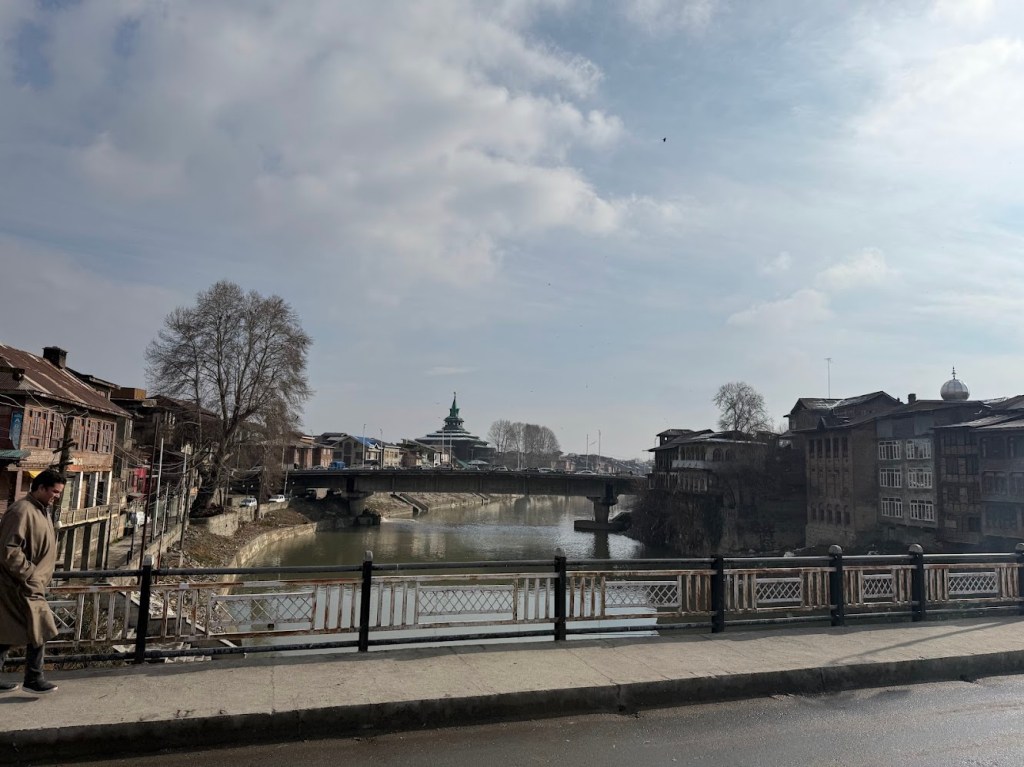
Srinagar, also known as Shehr-e-Kashmir (the city of Kashmir), is the historic capital of Kashmir. This seat of power for the Sultans of Kashmir rested in a strategic location for the defense of the city, with lakes and rivers being natural barriers to invasion. These lakes and especially the river, Jhelum, became natural highways for the people of Kashmir. These same waterways became home to the bridges of Srinagar. These bridges were the center of commerce and, still today, are the home of many markets primarily used by the local people. The bridges (Kadal in Kashmiri) will be the subject of this entry. To understand the layout, the history, and much of the culture of Srinagar, knowledge of these kadals is necessary. Each kadal has its own unique history and is surrounded by important locations to Srinagar’s culture.
There are many bridges in Srinagar, but we will specifically look at the seven historical bridges built on the Jhelum. There are other bridges with history, but these are the essential ones to know. Knowing these bridges and their localities gives a strong grasp of old Srinagar. To help with understanding the geography and locations of the bridges and the surrounding area, we will discuss these bridges according to their geographic location instead of by when they were built chronologically. The order of the bridges will start from the south and head north. First, the history surrounding the bridges will be discussed, concluding with an account of what is commonly found near the bridges today from firsthand experience.
Amira Kadal
The southernmost constructed bridge discussed in this entry is Amira Kadal. Amira Kadal was built in the mid-1770s by the Afghan governor of Kashmir, Amir Khan. During the same period, the palace Sher Garhi was built. This palace was used by the Afghans and Dogras during their rule. Sher Garhi has been rebuilt and remodeled a number of times and is now known as the Old Secretariat. It is not far from the current government’s main center. Like all the bridges discussed here, the original bridge is no longer standing. However, the government recently built a new wooden pedestrian bridge beside the existing bridge used by cars.
Habba Kadal
Next, Habba Kadal was built by Habib Shah of the Shah Miri Dynasty of Kashmir in 1551. It has been rebuilt a number of times, and just recently, in 2024, the old Kadal was renovated. The “old” Kadal is a pedestrian-only bridge, while the new one is used for cars. Though the old bridge was recently renovated, it is already falling into disrepair. From most of the bridges on this list, one can spot a mandir (Hindu temple) on the river, but Habba Kadal has the highest density of these mandirs. This is likely due to the large number of Hindu Pandits who used to live around Habba Kadal before the 1990s.
Fateh Kadal
North of Habba Kadal is Fateh Kadal. Fateh Kadal was built in 1500 by Fateh Shah. Old Fateh Kadal was a beautiful wooden footbridge, but it has since been replaced with a narrow metal bridge. One could easily pass the “old” bridge without noticing. In the same way that Habba Kadal has the largest number of Hindu temples, Fateh Kadal is surrounded by the largest number of Muslim shrines (from personal observations). Most of the shrines are incredibly small and likely known only to those in the immediate vicinity.
Zaina Kadal
Zaina Kadal, as the name suggests, was built by the Badshah of Kashmir, Zain-ul-Abdin, around 1425-1426. Zaina Kadal once had a market built atop the bridge itself. Today, the new and old Zaina Kadal bridges are unremarkable, but the views from the bridges are beautiful. Several historical landmarks surround the bridge. The Khanqah-e-Moula of the famed Shah-i-Hamadani (see my entry on him for more info) is near the bridge. There is also a nearby graveyard of the Sultans of Kashmir. This graveyard includes the Badshah’s grave as well as a large tomb he built for his mother. On the west side of the river is the Pather Masjid. This is a stone masjid (mosque) built by the Mughals in 1623.
Ali Kadal
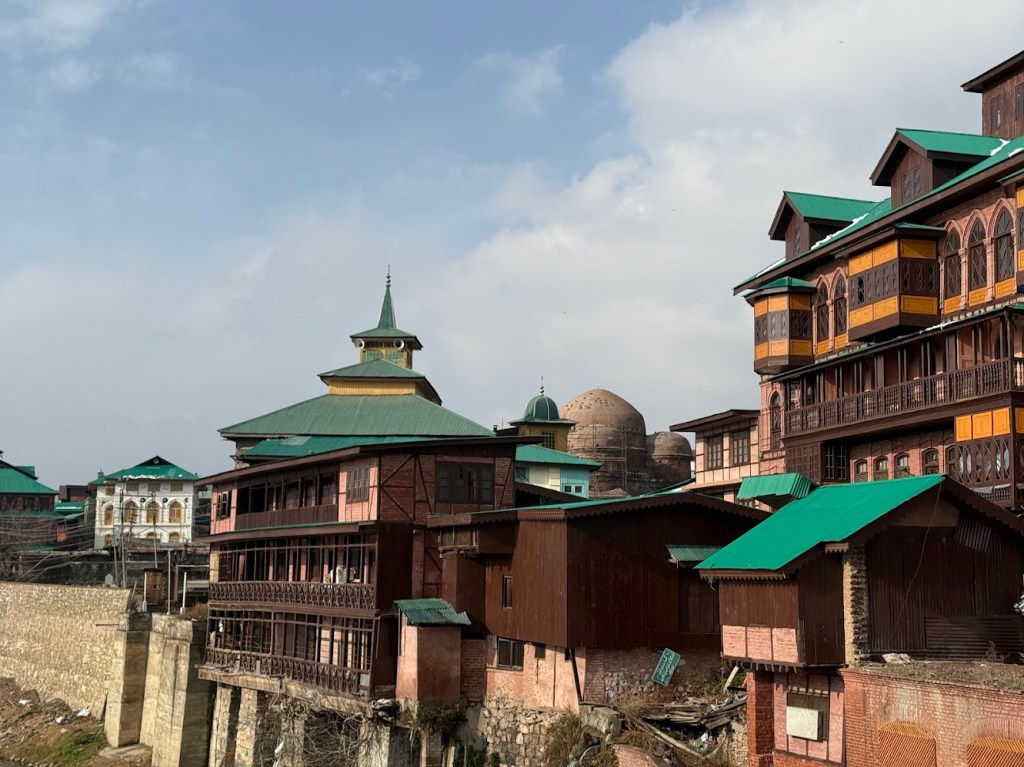
Next, Ali Kadal is the first bridge built across the Jhelum in Srinagar. It was built in 1415 by Ali Shah. Several historical sites are located near Ali Kadal. Directly beneath the bridge are steps that serve as docks for boats. These are called Ghats and are located at all the bridges discussed here, except Amira Kadal. However, the Ghats at Ali Kadal are known as Doeb Ghat. They are named after the Dhobi who wash pashmina shawls and rugs in the river. There are also several Muslim shrines in the area, as well as a couple of Hindu temples. The area northeast of the bridge is known as Wazpora. This locale is named after the Waza who make the local specialty food served particularly at weddings.
Nawa Kadal
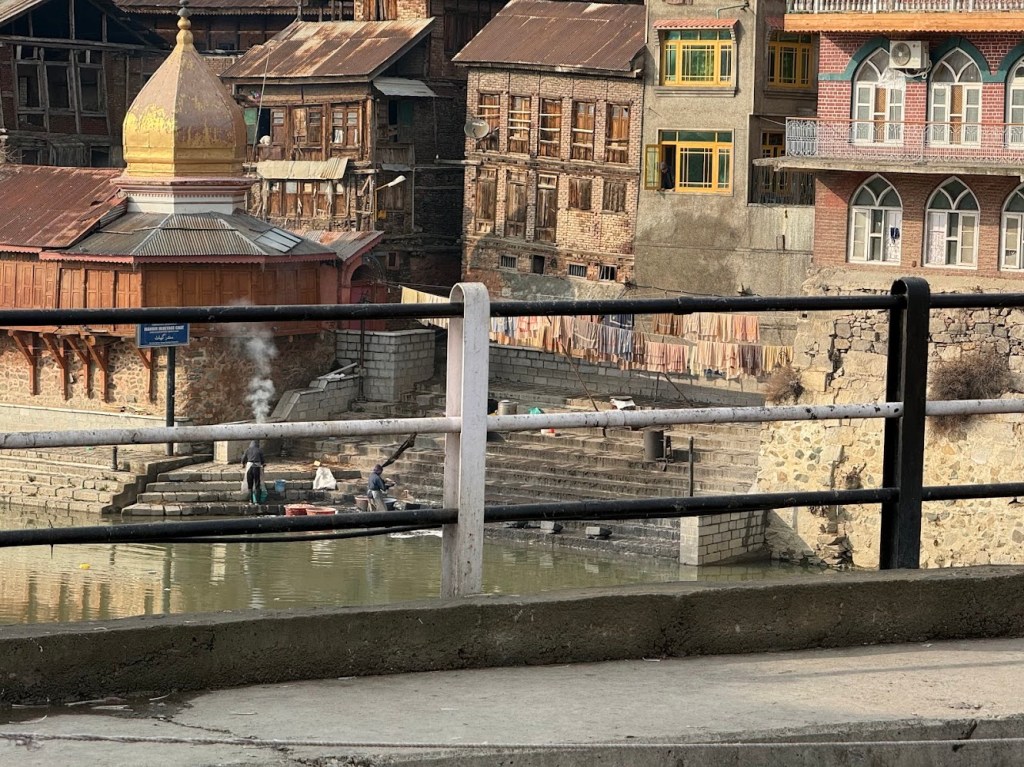
Everything I can find about Nawa Kadal says it was originally built in 1666 by Nur Din Khan Bamzai during the Afghan rule. The problem is that the Afghans did not rule Kashmir until 1751/52, and Nur Din Khan Bamzai was not the governor of Kashmir until 1762. So it is likely that all information about this bridge uses the same source, and that source had a typo, saying 1666 instead of 1766. Nearby, to the north of Nawa Kadal, is a shrine called Bulbul Shah Lankar. This shrine is dedicated to the first Sufi saint who came to Kashmir along with the king he converted, named Rinchan. For more on this, look to my blog post called the Advent of Islam.
Safa Kadal
Saif Khan built Safa Kadal in 1671. It is the northernmost bridge among the historic bridges built along the Jhelum. The area around Safa Kadal was a hub of international trade. Many travelers along the Silk Road would stop in Srinagar and stay in this locality. There is one historic building, the Yarkand Sarai, that housed many of the Yarkandi people on their journey along the Silk Road.
The Markets from Amira to Safa Kadal
Traversing the Jhelum to visit each bridge requires considerable effort. Most of these bridges don’t follow the main roads, especially those used by tourists. To some degree, that is no surprise. After all, most of these areas are dedicated to markets and holy places frequented by locals. The only slight exception is Amira Kadal, due to its proximity to Lal Chowk. However, to understand the cultural heritage of Srinagar, these local roads must be traversed. The Jhelum once formed a border for Srinagar. Therefore, the bridges that cross that border mark the perimeter of the heart of Srinagar. The oldest parts of Srinagar are found on the north and east sides of this border.
Today, these old markets still exist around each of these bridges. On both sides of Amira Kadal are bustling markets. Currently, the market on the west side of the bridge is the largest gold market in Srinagar. This market also has many dried fruit stores and stores selling supplies for various celebrations. This market is mostly used by local Kashmiris. Across the bridge to the east is the famous Lal Chowk market. This market also has many dried fruit sellers, but it is often frequented by tourists.
Heading north from Amira Kadal, one will find Habba Kadal. Just south of Habba Kadal, on the east side of the Jhelum, is Maisuma. There, you will find many Islamic bookshops and various electronic and mechanical shops. On the west side of Habba Kadal, you will find many textile shops. All throughout old Srinagar many bakeries can be found, but the stretch of road from Habba Kadal to just north of Fateh Kadal is filled with local bakeries. The bakeries in Fateh Kadal are known for their quality. Also, there is a large furniture market a few blocks east of Fateh Kadal. This furniture market is largely composed of inexpensive, factory-made furniture rather than traditional walnut furniture.
Further north is Zaina Kadal. This historic bridge likely has the most historic market among these bridges. Zaina Kadal Heritage Market is a large wholesale market located to the east of the bridge. It offers a wide range of goods, including spices, tea, dried fruit, silk, wool, and copperware. Heading east through the middle of the market, you will come to another market that leads to the Jamia Masjid. The area of these markets marks the center of Old Srinagar.
After Zaina Kadal, along the Jhelum, you will reach Ali Kadal. As mentioned above, near Ali Kadal is Wazpora, known for those who make the local specialty dishes. In this area, you can find many restaurants serving Wazwan as well as Harissa. On the west side of the river is a historic building converted into a museum known as Bait Ul Meras. Zaina Kadal and Ali Kadal are likely the most suitable for tourists to visit. Heading north to Nawa Kadal and Safa Kadal, the sights of old Srinagar begin to diminish. These areas also become more residential.
The importance of these bridges to the culture and heritage of Srinagar is evident. These areas are steeped in tradition, from the architectural design of the homes and the spirituality of the shrines that line the river, to the people who live and worship there. So much of the culture in these places is beyond explanation in words. Walking the streets in these localities tells you what the locals view as important and the culture they belong to. These areas seem less influenced by outside forces and hold tightly to the culture they originated. Simply standing on the bridges and observing the buildings built along the shore lines tell a story of years gone by. They tell of the Hindus who once lived in these places. It speaks of the Sufi saints who came and taught their doctrine. Through the old textile factories, it exclaims the economic fortune of the past, and whispers its resistance to change.

 Threads of Kashmir
Leave a comment